What Is a laser igniter
What Is A Laser Igniter
May
What Is A laser igniter is a high-powered device that uses a focused laser beam to initiate ignition — triggering combustion or ignition in a target material through the precise delivery of intense, concentrated laser energy. Rather than using conventional ignition methods such as spark plugs, electrical discharges, or open flames, a laser igniter uses the power of focused light energy to achieve rapid, precise, and highly controlled ignition.
Think of a laser igniter as a highly advanced ignition system — replacing traditional spark-based ignition with a pinpoint, contactless laser beam that delivers energy exactly where it is needed, exactly when it is needed, with extraordinary precision and consistency.
How Does a Laser Igniter Work?
The fundamental operating principle of a laser igniter is straightforward yet remarkably powerful:
Step-by-Step Process:
Step 1 — Power Generation
The laser igniter generates a high-powered laser beam using an internal laser source — typically a solid-state laser, fiber laser, or diode-pumped laser — powered by an electrical energy source.
Step 2 — Beam Focusing
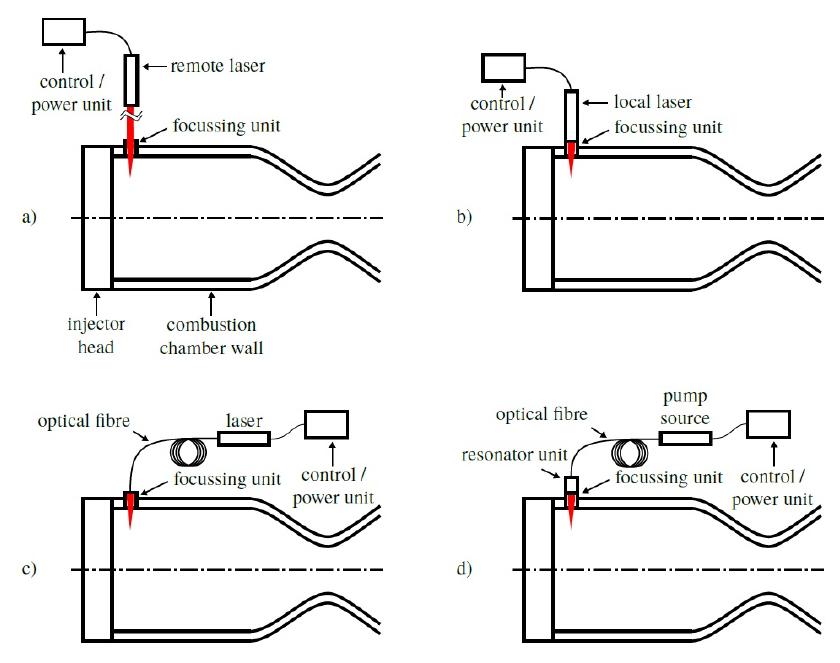
The generated laser beam is directed through a precision optical focusing system — a series of high-quality lenses and mirrors that concentrate the beam into an extremely small, intensely energetic focal point.
Step 3 — Energy Delivery
The focused laser beam is directed at the target ignition point — delivering a highly concentrated burst of energy that rapidly heats the target material to its ignition temperature.
Step 4 — Ignition
When the target material absorbs sufficient laser energy, it reaches its ignition threshold — triggering rapid combustion, plasma formation, or chemical ignition depending on the specific application and material involved.
Step 5 — Controlled Combustion
The result is fast, precise, and highly controlled ignition — initiated at the exact target point, at the exact moment required, with exceptional repeatability and reliability.
Key Components of a Laser Igniter
A professional-grade laser igniter typically consists of several critical components working together:
1. Laser Source
The heart of the laser igniters — generating the high-powered laser beam used for ignition. Common laser source types include:
- Nd:YAG Lasers — Neodymium-doped yttrium aluminum garnet — the most common type used in laser igniters, operating at 1064nm wavelength
- Fiber Lasers — High-efficiency, compact laser sources with excellent beam quality
- Diode-Pumped Solid-State Lasers — Highly efficient, compact, and reliable laser sources
- CO₂ Lasers — Used in specialized high-power industrial ignition applications
2. Optical System
The precision optical system focuses and directs the laser beam with pinpoint accuracy:
- Focusing Lenses — High–quality optical lenses that concentrate the beam
- Beam Steering Mirrors — Directing the beam with precision
- Beam Expanders — Adjusting beam diameter for different applications
- Adjustable Focus Mechanism — Fine-tuning the focal point for optimal ignition
3. Power Supply & Control System
- High-Voltage Power Supply — Providing stable, consistent power to the laser source
- Digital Control Interface — Managing laser output, pulse timing, and operational parameters
- Power Monitoring System — Ensuring consistent, stable laser output at all times
- External Connectivity — USB, RS-232, Wi-Fi, or Bluetooth for system integration
4. Safety Systems | what is a laser igniter
- Safety Key Lock — Preventing unauthorized activation
- Automatic Beam Shutter — Instantly blocking the beam in unsafe conditions
- Thermal Protection System — Preventing overheating
- Emergency Shutdown — Instant power cutoff in hazardous situations
5. Cooling System
- Water Cooling Circuit — Managing heat from the laser source
- Air Cooling System — Secondary cooling for thermal management
- Thermoelectric Cooling — Precision temperature regulation in advanced models
Types of Laser Igniters
There are several types of laser igniters designed for different applications and power requirements:
1. Pulsed Laser Igniters
Deliver short, intense bursts of laser energy in rapid pulses:
- Ultra-Short Pulse Duration — Nanosecond to femtosecond pulse widths
- High Peak Power — Extremely high instantaneous power delivery
- Precise Energy Control — Accurate control of energy per pulse
- Best For — Research applications, aerospace ignition, plasma generation
2. Continuous Wave (CW) Laser Igniters
Deliver a constant, continuous laser beam at a steady power output:
- Constant Power Output — Steady, consistent energy delivery
- Sustained Heating — Gradual heating of the target material
- Stable Performance — Consistent, reliable ignition results
- Best For — Industrial applications, thermal processing, material ignition testing
3. High-Power Laser Igniters (100W — 120W+)
Professional-grade devices delivering exceptional power output:
- 100W — 120W+ Output — Maximum ignition power for demanding applications
- Precision Beam Quality — M² < 1.1 to M² < 1.5 beam specifications
- Advanced Safety Systems — Multi-layer protection architectures
- Best For — Advanced research, aerospace, defense, and industrial applications
Why Are Laser Igniters Used?
Laser igniters offer a series of powerful advantages over conventional ignition technologies:
Key Advantages:
| Advantage | Description |
|---|---|
| Precision | Pinpoint accuracy — ignition at the exact target point |
| Speed | Instantaneous ignition in milliseconds |
| Contactless | No physical contact required |
| Reproducibility | Consistent, repeatable ignition results |
| Versatility | Works with a wide range of materials |
| Safety | Controllable, predictable ignition behavior |
| Durability | No spark plug wear or electrode degradation |
| Controllability | Precise control over energy delivery |
| Remote Operation | Can be operated from a safe distance |
| Energy Efficiency | Targeted energy delivery — minimal waste |
Applications of Laser Igniters
Laser igniters are used across a wide range of critical industries and applications:
Scientific Research
- Combustion Research — Studying flame propagation and ignition dynamics
- Chemical Studies — Controlled ignition for reaction studies
- Energy Research — Advanced combustion and energy release studies
- Materials Testing — Investigating ignition properties of materials
Industrial Applications
- Industrial Furnaces — Reliable, contactless ignition for high-temperature processes
- Combustion Systems — Testing and optimizing industrial burners
- Manufacturing Processes — Controlled ignition for thermal manufacturing
- Thermal Processing — Precision heat treatment applications
Aerospace & Defense
- Rocket Propulsion — Laser ignition for advanced propulsion systems
- Jet Engine Testing — Precision ignition for aerospace engine development
- Hypersonic Research — Ignition studies at extreme conditions
- Defense Applications — Advanced ignition for defense systems
Energy Sector
- Alternative Energy — Hydrogen and biomass combustion research
- Battery Testing — Thermal runaway and safety testing
- Power Generation — Next-generation energy technology development
- Nuclear Fusion Research — Laser ignition in fusion energy experiments
Laser Igniter Safety
Because laser igniters are Class IV laser devices — the highest and most powerful laser classification — strict safety protocols must always be followed:
- Always wear certified laser safety eyewear — OD 6+ at the operating wavelength
- Never direct the beam at people, animals, or reflective surfaces
- Always engage safety locks when the device is not in active use
- Only trained, qualified personnel should operate laser igniters
- Post laser hazard warning signs in all operating areas
- Follow all local and national laser safety regulations
- Ensure all cooling systems are operational before activation
- Always conduct pre-operation safety checks before every use
Key Takeaways
| Fact | Detail |
|---|---|
| What It Is | A device that uses focused laser energy to initiate ignition |
| How It Works | Focuses laser beam on target to deliver intense ignition energy |
| Key Advantage | Precise, contactless, reproducible, and controllable ignition |
| Main Uses | Research, industrial, aerospace, defense, and energy sectors |
| Power Range | From low-power research units to 100W — 120W+ industrial models |
| Safety Class | Class IV — Highest powered laser classification |
| Key Benefits | Precision, speed, contactless operation, and reproducibility |
Explore Our Laser Igniter Range
Ready to experience the power and precision of professional laser ignition technology?
- Laser Igniter 120W 008 — The professional benchmark
- Laser Igniter 100W 005 — Next-generation precision
- Laser Igniter 120W 007 — The ultimate performance
